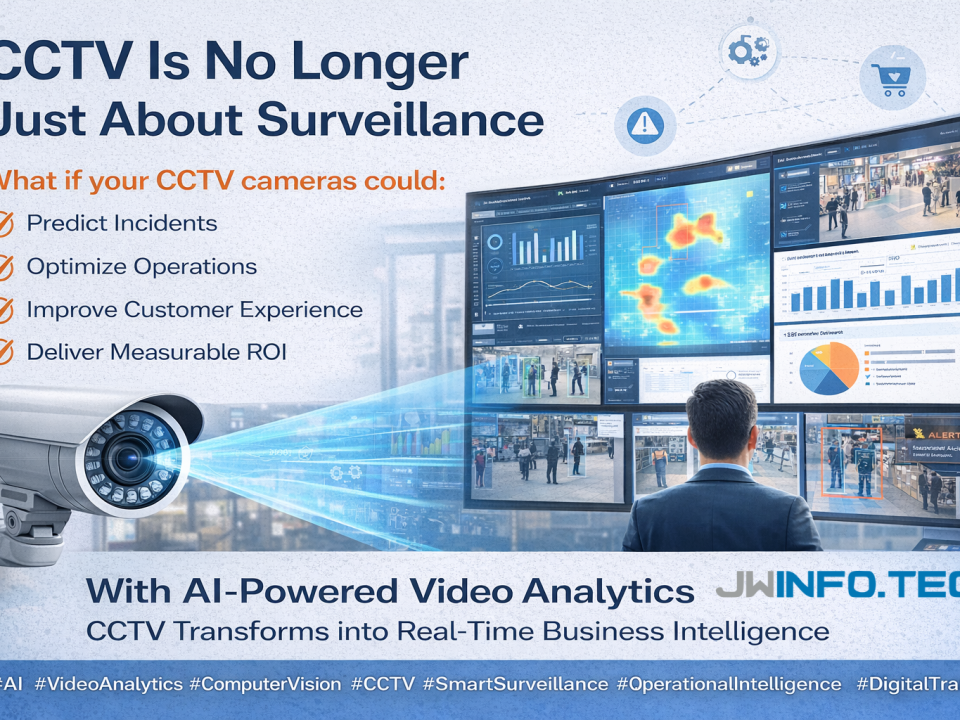
AI Calling Agents: The Biggest Boon for SMEs Globally

Agentic AI – The Game-Changer in Enterprise Automation
December 10, 2025
Turning CCTV Feeds into Business Intelligence with AI Video Analytics
December 24, 2025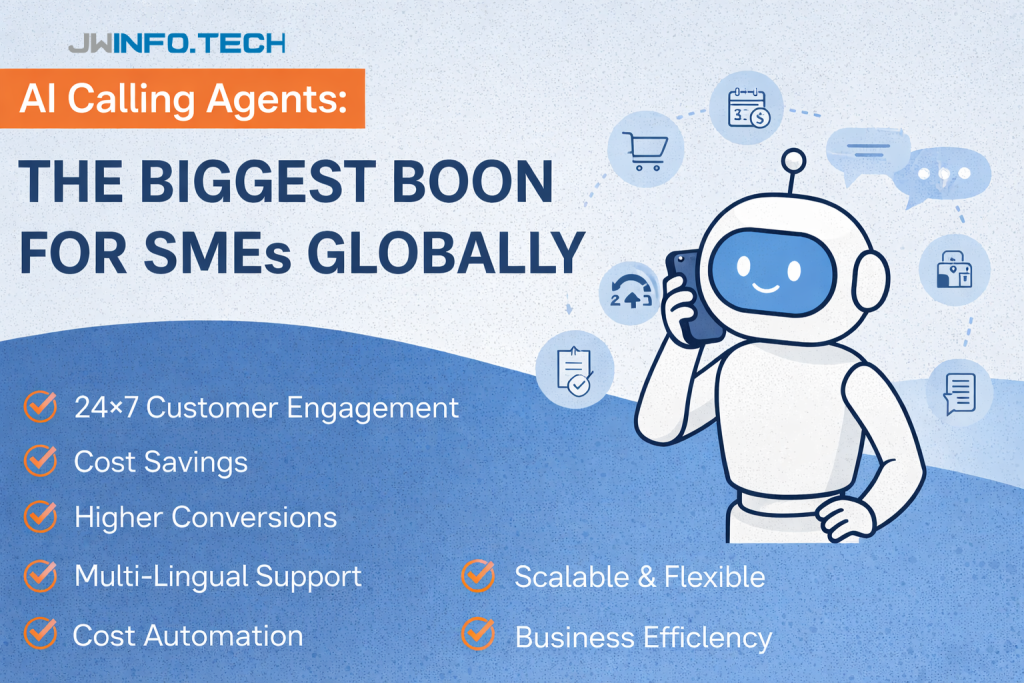
Executive Summary
Small and Medium Enterprises (SMEs) form the backbone of the global economy, yet they consistently face constraints in scaling operations, customer outreach, and support. AI calling agents—powered by conversational AI, NLP, and agentic decision-making—are rapidly emerging as one of the most impactful technologies enabling SMEs to compete with larger enterprises.
This case study explores how AI calling agents are transforming SME operations across sales, customer support, collections, and engagement—delivering tangible ROI with minimal infrastructure overhead.
The SME Challenge
Across geographies, SMEs commonly struggle with:
- Limited manpower for outbound and inbound calls
- High cost of hiring and retaining call center staff
- Inconsistent customer engagement and follow-ups
- Restricted operating hours
- Low visibility into call performance and conversion metrics
- Inability to scale during peak demand
Traditional call center models are often cost-prohibitive and inefficient for SMEs.
The AI Calling Agent Solution
AI calling agents are voice-based AI systems capable of:
- Making and receiving calls autonomously
- Understanding natural language and intent
- Following dynamic conversation flows
- Integrating with CRMs, ERPs, and ticketing systems
- Learning from interactions and improving over time
Unlike IVRs, modern AI calling agents behave like intelligent assistants—capable of reasoning, decision-making, escalation, and personalization.
Multi-Role Perspective Analysis
1. Business & Strategy Perspective
- SMEs gain enterprise-grade calling capability without enterprise costs
- Easy scalability during campaigns, festivals, or sales peaks
- Faster market expansion without geographical constraints
2. Sales & Growth Perspective
- Automated lead qualification and follow-ups
- Consistent pitch delivery and objection handling
- Higher conversion rates due to instant engagement
- Reduced leakage from missed or delayed callbacks
3. Operations & Cost Perspective
- Up to 50–70% reduction in calling costs
- No dependency on shift management or attrition
- Predictable operational expenses
- Faster turnaround for customer interactions
4. Customer Experience Perspective
- 24×7 availability across time zones
- Faster response times
- Multilingual support at scale
- Personalized conversations using customer data
5. Technology & AI Perspective
- NLP + Speech-to-Text + Text-to-Speech
- Agentic AI for decision-making and task completion
- Seamless integration with CRM, billing, and support systems
- Real-time analytics and conversation intelligence
Use Cases Where SMEs See Immediate Impact
- Lead generation & qualification
- Appointment booking & confirmations
- Customer support & FAQs
- Payment reminders & collections
- Order confirmations & delivery updates
- Feedback and surveys
Measurable Outcomes Observed
- 📈 30–45% increase in lead conversion rates
- ⏱ 60% faster response and follow-up cycles
- 💰 Significant reduction in cost per call
- 🔁 Improved customer retention and satisfaction
- 📊 Better visibility through call analytics dashboards
Why This Is a Turning Point for SMEs
AI calling agents remove the traditional trade-off between scale and affordability. SMEs can now:
- Operate like large enterprises
- Maintain lean teams
- Focus human talent on high-value interactions
- Experiment, iterate, and scale rapidly
This shift is not incremental—it is structural.
Conclusion
AI calling agents represent one of the most democratizing technologies in the SME ecosystem. By combining automation, intelligence, and conversational ability, they empower SMEs to grow faster, operate smarter, and engage customers more effectively—without the burden of traditional call infrastructure.
For SMEs globally, AI calling agents are no longer a “nice-to-have.”
They are a growth multiplier.